How to Choose a Reliable smart home power adapter OEM
A comprehensive smart home power adapter OEM factory guide is the ultimate blueprint for device brands looking to secure reliable, highly efficient, and custom-certified power supply solutions for their smart ecosystems. Many smart hardware brand managers face the constant nightmare of cheap, unstable power supplies that trigger unexpected device reboots, electrical failures, and costly product recalls. Imagine your premium device failing in the hands of consumers or sparking a safety hazard simply because of a poorly manufactured wall plug. It destroys consumer trust, ruins your hard-earned reputation, and bleeds your business margins dry. Partnering with a professional smart home power adapter OEM eliminates these critical vulnerabilities by delivering custom-engineered, certified, and highly stable power solutions tailored exactly to your device’s physical and electrical specifications.
① What Is a Smart Home Power Adapter OEM?
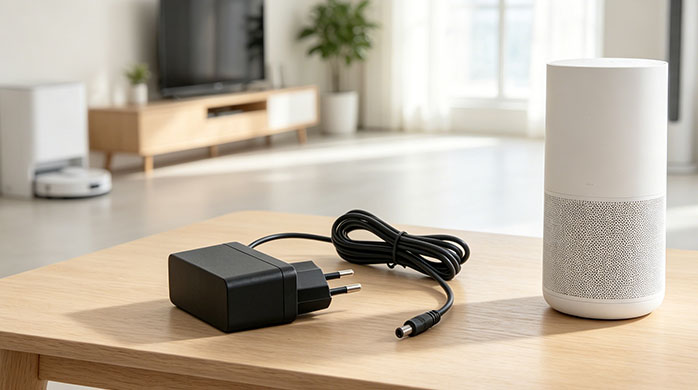
A smart home power adapter OEM is a specialized manufacturer that designs and produces custom-tailored power supply systems specifically engineered to match the unique physical and electrical demands of modern smart home devices. These dedicated factories go far beyond selling off-the-shelf wall plugs by offering bespoke engineering solutions for smart devices. By utilizing their manufacturing and design assets, you can create power solutions that integrate seamlessly with your unique physical designs.
These OEM factories operate large-scale, automated production facilities that handle everything from PCB layout to injection molding. This end-to-end control allows them to deliver massive batches of power units that remain uniform in quality. For B2B buyers, this translates to predictable manufacturing schedules and highly competitive unit costs. Ultimately, it allows your engineering team to focus entirely on software and core product development.
Unlocking IoT Smart Home Ecosystems
The massive growth of smart thermostats, smart security cameras, and voice hubs requires highly specialized power delivery. Here is the key: generic power bricks are simply not designed to handle the fluctuating load demands of modern wireless chipsets.
-
Continuous Standby: Smart assistants require stable idle currents to keep voice recognition active 24/7.
-
Eco-Efficiency: Connected sensors need reliable low-power standby modes to minimize energy waste.
-
Signal Integrity: Wireless transceivers demand clean power lines to prevent signal dropouts.
Selecting a tailored power solution prevents these issues from affecting your users. By working with a specialized factory, you receive hardware optimized to reduce electromagnetic interference, ensuring your device maintains robust wireless connections without dropouts.
Meeting Modern Consumer Power Demands
Modern consumers demand fast charging, high energy efficiency, and compact physical designs that do not block adjacent wall outlets. What does this mean for you? It means you cannot rely on bulky, outdated power supplies if you want to compete in today’s premium consumer market.
-
Aesthetic Integration: Sleek wall-mount designs are preferred for aesthetic integration into modern homes.
-
Cool-to-Touch Thermals: Energy-efficient architectures keep the adapter cool to the touch even during peak operation.
-
Future-Proof Connectors: Multi-protocol USB-C delivery ensures future-proof compatibility across smart ecosystems.
Adapting to these shifts requires direct engineering input from the factory floor.
Key Takeaway: Choosing a dedicated OEM partner ensures your power supplies match modern aesthetic standards while delivering the precise, fluctuating power profiles that advanced smart home ecosystems demand for long-term operational stability.
| Smart Home Device Class | Typical Voltage & Current | Key Power Requirement | OEM Customization Priority |
|---|---|---|---|
| Smart Hubs & Controllers | 5V / 2A or 12V / 1A | Ultra-low ripple voltage | EMI/EMC suppression |
| Security Cameras (PTZ) | 12V / 1.5A to 2A | Dynamic peak load handling | Outdoor weatherproofing |
| Smart Thermostats | 24V AC or 5V DC | Continuous low standby draw | Miniature internal PCB layout |
Analyzing these power configurations reveals that customized electrical layouts are essential to prevent system crashes across different smart device classes.
② Why Do Smart Device Brands Need a Smart Home Power Adapter OEM?
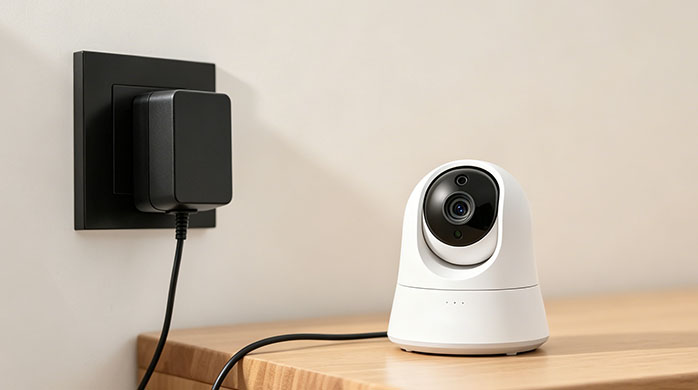
Smart device brands require a smart home power adapter OEM because off-the-shelf power options fail to meet the tight space, efficiency, and safety requirements of bespoke IoT hardware. If you attempt to package a generic adapter with a premium smart device, you risk experiencing severe performance bottlenecks. Think about it: your product’s performance is only as stable as the electricity flowing into it. This is why scaling brands partner with experienced manufacturers to build dedicated power pipelines from day one.
Furthermore, custom power supplies allow you to align your brand’s industrial design with your packaging footprint. Bulkier retail packages increase shipping costs, whereas custom compact plugs drastically improve transport logistics. Direct factory sourcing also shields your bottom line from middleman markups. In the B2B landscape, these cost savings directly translate into healthier profit margins.
Mastering Global Energy Efficiency Targets
Global regulatory markets demand strict adherence to standby energy conservation standards like DoE Level VI and European CoC Tier 2. But that is not all. If your adapter fails to meet these strict requirements, customs agencies can legally block your shipments at the border.
-
DoE Level VI: Requires high active-mode efficiency and minimal standby power limits.
-
CoC Tier 2: Places even tighter controls on light-load efficiency levels.
-
ErP Regulations: Mandates eco-design frameworks for all electronics sold in Europe.
Navigating these hurdles requires deep regulatory expertise from your supply partner. An experienced manufacturer designs circuits with high-efficiency controllers to minimize no-load standby consumption, keeping your smart brand compliant.
Balancing Intelligence with Hardware Safety
Smart home devices are constantly connected to municipal power grids, making them highly vulnerable to sudden voltage fluctuations. Here is the key: sensitive internal microprocessors can easily burn out if the input voltage spikes without warning.
-
Over-Voltage Protection (OVP): Clamps dangerous spikes before they reach the device.
-
Over-Current Protection (OCP): Limits current to prevent motherboard fires.
-
Short-Circuit Protection (SCP): Isolates faults to prevent electric shocks.
Implementing these features directly protects your consumer-facing brand reputation.
Key Takeaway: Partnering with an OEM allows you to build custom safety and energy-efficiency frameworks into your power supplies, protecting your sensitive IoT hardware from grid anomalies and ensuring seamless global import compliance.
| Regulatory Standard | Primary Target Region | Max No-Load Standby Draw | Efficiency Requirement |
|---|---|---|---|
| DoE Level VI | United States | < 0.100 Watts | High active efficiency curve |
| CoC Tier 2 | European Union | < 0.075 Watts | Exceptional light-load efficiency |
| PSE Circle/Diamond | Japan | Meets DENAN law limits | Superior thermal insulation |
Evaluating international efficiency standards demonstrates that proactive compliance design is the most effective way to eliminate customs bottlenecks in major markets.
③ How Does a Smart Home Power Adapter OEM Support Customization?
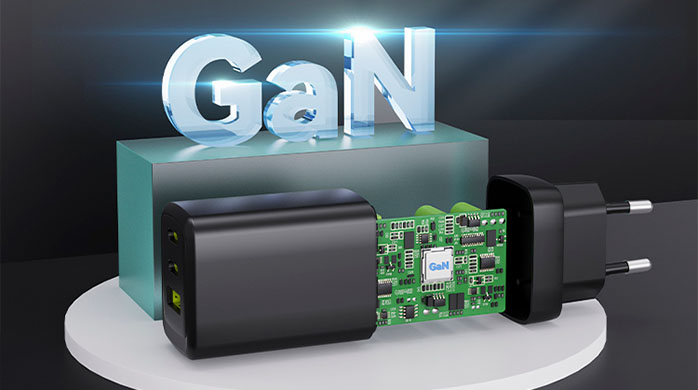
A certified smart home power adapter OEM supports customization by engineering bespoke PCB layouts, adjusting electrical parameters, and tailoring casing shapes to match your device’s exact specifications. This cooperative design process ensures that both internal chipsets and external plastics are built for your application. If your device requires non-standard power, standard factories cannot help. That is where tailored manufacturing bridges the gap for innovative product teams.
Furthermore, customization extends to cables, connection tips, and laser-etched branding options on the adapter casing itself. Having your logo neatly engraved on a high-end power brick enhances your product’s premium retail presentation. It also helps consumers easily identify the correct plug for your hardware. This small detail dramatically reduces accidental device damage from mismatched power supplies.
Implementing Advanced Thermal Management
Miniaturized power adapters generate substantial heat that can degrade electronic components over extended periods. Think about it: a hot wall adapter is a major safety concern for safety-conscious homeowners.
-
PC/ABS Casings: Flame-retardant outer adapter enclosure material protects against high-temperature deformation.
-
Thermal Potting: Compounds are injected inside to distribute internal heat evenly.
-
Optimized Layouts: Strategic component spacing prevents localized heat zones.
These structural choices keep the adapter operating at safe temperatures. Using high-grade thermal materials ensures the adapter maintains a long operational lifespan, resulting in fewer warranty claims and higher customer satisfaction.
Leveraging Gallium Nitride for High Density
For products requiring higher wattage, Gallium Nitride (GaN) semiconductors offer revolutionary advantages over traditional silicon chips. Here is the key: GaN runs cooler and handles much higher power densities in ultra-compact enclosures.
-
Compact Enclosures: Smaller physical dimensions make transport and packaging significantly cheaper.
-
High-Frequency Switching: Minimizes energy conversion losses.
-
Cooler Operations: Prolongs the life of surrounding capacitors.
This technology is essential for premium, high-power smart home displays and chargers.
Key Takeaway: Comprehensive physical customization, combined with thermal engineering and modern GaN technology, enables you to offer ultra-compact, cool-to-the-touch power adapters that perfectly match your brand’s design aesthetic.
| Material/Technology | Primary Thermal Role | Key Performance Benefit | Expected Operating Lifespan |
|---|---|---|---|
| 94V-0 Rated PC/ABS | Outer adapter enclosure | Flame retardant, impact resistant | 10+ Years under normal use |
| Thermal Potting Glue | Internal component heat transfer | Dissipates hotspots efficiently | Extends component lifespan by 40% |
| GaN Semiconductor | Energy-efficient power switching | Cuts heat dissipation by half | Ultra-compact casing layouts |
Integrating advanced materials like GaN and flame-retardant polymers ensures that miniature power supplies run remarkably cool under continuous loads.
④ What Devices Require a Smart Home Power Adapter OEM Solution?
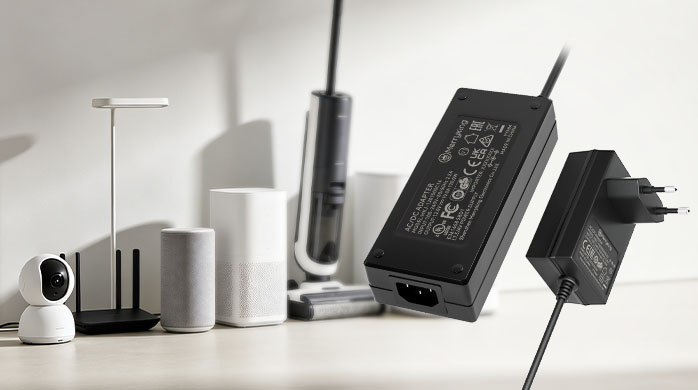
Devices that require a smart home power adapter OEM solution include smart hubs, pan-tilt-zoom security cameras, smart thermostats, and motorized window shades that demand custom voltage inputs or high-peak start currents. Off-the-shelf adapters often trigger brownouts when these devices suddenly activate their internal motors or wireless transmitters. This electrical bottleneck can lead to system freezes and frustrated end-users. Fortunately, custom-tuned power supplies can handle these dynamic electrical loads with ease.
Furthermore, multi-device charging cradles and voice-activated smart displays have unique power delivery profiles. They must negotiate voltages dynamically to avoid damaging sensitive touchscreen elements. Working with a dedicated B2B partner guarantees that your hardware gets the exact, steady power line it needs. This ensures a flawless user experience across your entire product ecosystem.
Powering Smart Hubs and Voice Controllers
Central smart hubs act as the brain of the home, requiring uninterrupted power 24 hours a day. What does this mean for you? Any minor ripple or voltage fluctuation can cause the entire home network to lose connection.
-
Low-Noise Filtering: Prevents interference with sensitive Z-Wave or Zigbee chips.
-
Miniature Layouts: Fits PCB components neatly into decorative desk stands.
-
Dynamic Routing: Supports multiple simultaneous wireless connections.
Securing a stable energy stream is non-negotiable for these core controllers. By matching the exact power profile of your hub’s processor, you reduce system hangs and keep the network online.
Choosing Wall-Mount vs. Desktop Architectures
Choosing the wrong physical layout for your power supply can ruin an otherwise great product design. Here is the key: wall-mount adapters are perfect for lightweight gadgets, while heavy-draw systems require robust desktop brick layouts.
-
Wall-Mount Designs: Saves space and plugs directly into standard wall receptacles.
-
Desktop Power Supplies: Keeps high-voltage components safely isolated on the floor or desk.
-
Interchangeable Plugs: Quick-swap global plug structures allow you to ship the same device worldwide.
Selecting the correct form factor depends entirely on your target user environment.
Key Takeaway: From continuous-use smart hubs to mechanical security cameras, matching your device with either a wall-mount or desktop adapter ensures stable power delivery and seamless consumer integration.
| Form Factor Option | Typical Wattage Range | Primary Application Space | Regional Compatibility |
|---|---|---|---|
| Wall-Mount Adapter | 5W to 36W | Compact smart plugs & sensors | Fixed regional plug structures |
| Desktop Power Supply | 24W to 150W | Central hubs & display panels | Detachable AC cords (C14, C8) |
| Interchangeable Plug | 5W to 60W | Globally shipped retail products | Quick-swap UK, US, EU, AU plugs |
Selecting the correct physical form factor ensures that your power supply fits the specific ergonomic and electrical layout of your target consumer’s home.
⑤ Which Certifications Should a Smart Home Power Adapter OEM Provide?
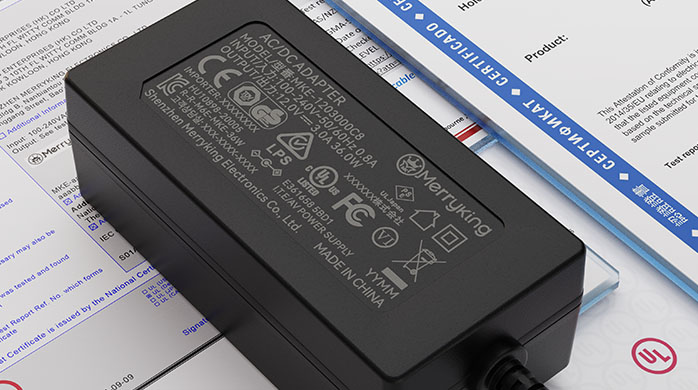
A reputable smart home power adapter OEM must provide full global safety certifications, including UL/cUL for North America, CE and GS for Europe, PSE for Japan, and FCC/RoHS compliance. Selling uncertified electrical products exposes your brand to massive legal liabilities and high consumer return rates. But there is a catch: navigating the complex certification landscape on your own can cost tens of thousands of dollars. Partnering with a fully certified factory resolves this problem by offering pre-approved safety designs.
Additionally, certified power adapters drastically reduce the overall time and cost required to test your main smart home product. Testing labs will fast-track your device’s final approval if the power supply is already pre-certified. This advantage gives you a major head start in launching your product before competitors. It is a critical competitive edge in the fast-moving electronics industry.
Decoding Regional Safety Marks
Each geographic market maintains its own rigorous safety and testing criteria for household electrical goods. Think about it: trying to sell a CE-only product in North America will get your inventory banned by major retailers.
-
UL 62368-1: The gold standard for audio, video, and IT equipment safety in the US.
-
CE Marking: Proves conformity with European health, safety, and environmental protection laws.
-
PSE Certification: A mandatory legal requirement for all power adapters sold in Japan.
Ensuring compliance across these regions guarantees unhindered global growth. A factory that keeps active certificates for their designs makes it extremely easy to apply your brand name to the test reports.
Accelerating Your Path to Market
Using pre-certified components is the fastest way to get your smart device onto retail shelves. Here is the key: if you build a power supply from scratch, you face months of expensive testing delays.
-
Report Transfer: Transferring UL or CE reports is a simple administrative process.
-
Risk Mitigation: Pre-certified adapters eliminate the risk of unexpected lab failures.
-
Retail Priming: Retailers prioritize brands that carry reputable third-party safety marks.
This strategic shortcut keeps your launch timeline on schedule.
Key Takeaway: Choosing a manufacturer with valid global certifications (UL, CE, FCC) eliminates legal compliance risks and slashes your overall product testing costs for a faster market launch.
| Safety Mark | Targeted Market | Key Testing Focus | Average Direct Lead Time |
|---|---|---|---|
| cULus (UL62368-1) | North America | Fire, electrical shock protection | 6 to 8 Weeks |
| CE (EN62368-1) | European Union | LVD safety, EMC compliance | 4 to 6 Weeks |
| FCC Part 15 Class B | United States | Radiated & conducted emissions | 2 to 3 Weeks |
Utilizing pre-certified adapters minimizes administrative delays and ensures your products easily pass rigorous retail and customs compliance audits.
⑥ How Can a Smart Home Power Adapter OEM Improve Device Safety?
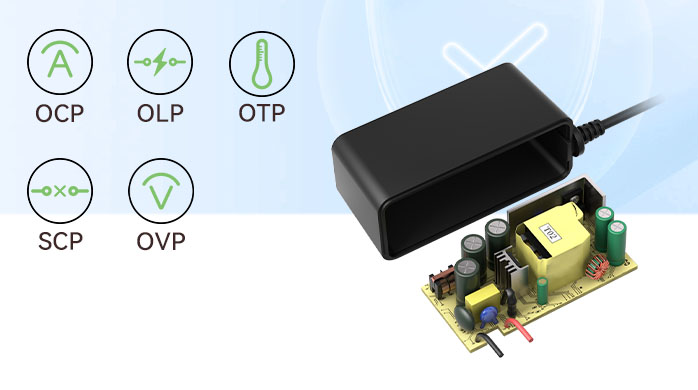
A smart home power adapter OEM can improve device safety by designing advanced multi-layered protection circuits directly into the adapter’s PCB to handle over-voltage, over-current, short-circuits, and thermal runaway. These active safety measures act as a barrier between your expensive smart hardware and erratic wall currents. If a power surge strikes, the adapter shuts down instantly to protect the connected device. This robust engineering minimizes the risk of catastrophic hardware failures in consumer homes.
Furthermore, the factory uses high-voltage dielectric isolation to prevent internal electricity from leaking to the external casing. This step completely eliminates the risk of user-end electric shocks during everyday handling. When you buy from an elite OEM, safety is integrated into every stage of development. It gives you absolute peace of mind regarding product liability.
Engineering Reliable Protection Circuitry
A truly safe power adapter relies on precision silicon controllers to monitor input and output currents in real-time. Look: cheap adapters skimp on these safety chips to save pennies, putting your entire business at risk.
-
Over-Voltage Protection (OVP): Clamps input spikes before they reach internal chips.
-
Over-Current Protection (OCP): Shuts down power if the connected device draws unsafe loads.
-
Short-Circuit Protection (SCP): Prevents sparks and melting if a wire is damaged.
These protection networks are essential for items left plugged in 24/7. By integrating auto-recovery functions, the adapter automatically restores power once the electrical fault is cleared.
Utilizing High-Pot Dielectric Insulation
To ensure the outer housing is completely safe to touch, adapters undergo strict high-potential (Hi-Pot) testing at the factory. What does this mean for you? It means the insulation barrier is proven to withstand extreme voltages without breaking down.
-
Dielectric Testing: Applies up to 3000V AC to check for current leakage.
-
Transformer Insulation: High-grade insulation tape wraps around the transformer.
-
Creepage Barriers: Physical distance barriers on the PCB prevent electrical arcing.
These strict measures ensure total safety during everyday household use.
Key Takeaway: High-quality protection circuits and rigorous Hi-Pot testing are critical to ensuring your smart devices remain safe from grid instability, thereby protecting your brand’s field reputation.
| Protection Circuitry | Trigger Condition | System Action | Restorative Action |
|---|---|---|---|
| Over-Voltage (OVP) | Input exceeds 120% nominal | Instantly clamps voltage line | Auto-recovery once voltage stabilizes |
| Over-Current (OCP) | Load exceeds 130% nominal | Shuts off current delivery | Auto-recovery when load is removed |
| EMI Filtering | High-frequency noise spike | Dampens noise via line filter | Continuous active filtration |
Implementing automatic shut-off safety systems within the adapter’s core circuitry protects consumer hardware and prevents hazardous electrical incidents.
⑦ What Power Options Can a Smart Home Power Adapter OEM Offer?
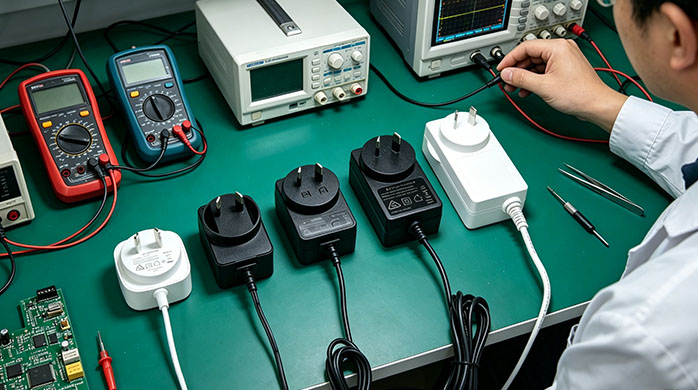
A versatile smart home power adapter OEM can offer a wide spectrum of electrical options, ranging from standard 5V and 12V USB outputs to specialized 24V AC configurations, with power ratings spanning 5W up to 150W for heavy-duty smart devices. This broad capability allows you to source adapters for everything from low-power wall sensors to power-hungry multi-channel smart displays. If your device has non-standard power requirements, an experienced factory can custom-tune the output to the exact decimal point.
Additionally, they can design wide-voltage input circuits (90V–264V AC) to ensure your product works flawlessly in any country around the world. This universal compatibility simplifies your global supply chain by letting you package a single adapter model for all markets. You simply swap the physical wall plug to match local sockets. It is a highly efficient way to manage international distribution.
Customizing Voltage and Amperage
Many high-performance smart devices require precise voltage levels to maintain stable wireless communication and touch sensitivity. But there is a catch: standard off-the-shelf 5V chargers often experience voltage drops over long cables, causing device instability.
-
Voltage Drop Compensation: Custom 5.2V or 12.5V configurations offset cable resistance.
-
Dynamic Startup Handling: Amperage profiles support high-power start-up spikes for motors.
-
Ultra-Low Ripple: Clean DC outputs protect sensitive touch controllers from ghost touches.
These tailored settings ensure your hardware operates exactly as intended by your engineering team. Customizing the electrical output prevents accidental brownouts when your smart device performs resource-intensive tasks.
Supplying Universal Global Input Voltage
To sell your smart products globally, your power adapters must handle various regional power grids without failing. Here is the key: a wide input voltage range protects your device from damage caused by local grid fluctuations.
-
90V–264V Range: Universal 100V-240V AC rating ensures compatibility from Japan to Europe.
-
Grid Tolerance: Built-in tolerance protects against erratic regional surges.
-
Conversion Efficiency: Reduces waste heat regardless of input voltage.
This universal design makes global expansion incredibly straightforward.
Key Takeaway: A top-tier OEM offers flexible output configurations and universal input voltage ranges, allowing you to power diverse smart devices safely across all international markets.
| Power Category | Typical Voltage Range | Max Current Capacity | Target Smart Home Devices |
|---|---|---|---|
| Low-Power DC | 5V – 9V | Up to 2.5A | Voice assistants, sensors, smart plugs |
| Medium-Power DC | 12V – 19V | Up to 5A | Security cameras, smart displays, routers |
| High-Power / GaN | 20V – 24V | Up to 6.5A (150W) | Multi-device chargers, smart base stations |
Utilizing universal-input voltage adapters simplifies global SKU management and reduces overall inventory warehousing costs.
⑧ How Does a Smart Home Power Adapter OEM Ensure Mass Production?

A smart home power adapter OEM ensures stable mass production by utilizing fully automated SMT assembly lines, implementing strict multi-stage quality control, and maintaining robust component supply chain agreements. Transitioning from prototype design to full-scale manufacturing is a delicate process where minor errors can ruin entire product batches. Think about it: a single loose solder joint on a PCB can cause thousands of adapters to fail in the field. This is why reliable factories run automated, robotic production lines to eliminate human error entirely.
Additionally, these factories coordinate their production schedules to align with your product launch windows. This careful planning avoids costly inventory bottlenecks and keeps your retail distributors happy. By securing long-term raw material contracts, they also insulate your production run from sudden material shortages. This strategic coordination guarantees that your supply chain remains resilient year-round.
Automating the PCB Assembly Line
High-speed Surface Mount Technology (SMT) lines are the backbone of modern electronics manufacturing. Look: manual soldering simply cannot match the precision and speed required for complex power circuitry.
-
Precision Robotics: Pick-and-place machines position components within microns of accuracy.
-
AOI Inspection: Automated Optical Inspection scans every solder joint for hidden defects.
-
Nitrogen Reflow: Strong, corrosion-resistant electrical connections are established.
This level of automation guarantees that the millionth adapter performs exactly like the first. By reducing manual intervention, the factory minimizes defect rates and speeds up assembly times.
Securing Long-Term Component Sourcing
Global semiconductor shortages can halt your product launch overnight if your manufacturing partner is unprepared. Here is the key: an elite factory maintains direct, long-term supply agreements with tier-1 capacitor and IC makers.
-
Pre-Stocked Buffers: Shields production from sudden market component shortages.
-
Alternative Sourcing: Multi-vendor certified alternates prevent single-point-of-failure delays.
-
Price Stability: Locked-in material costs keep raw material expenses predictable.
These proactive sourcing strategies keep your product roadmap moving forward without delay.
Key Takeaway: Leveraging automated SMT assembly lines and securing direct agreements with premium component suppliers allows an OEM to guarantee consistent quality and timely deliveries for high-volume orders.
| Test Class | Factory Implementation Rate | Standard Test Duration | Intended Defect Prevention |
|---|---|---|---|
| Full-Load Burn-In | 100% of all units | 4 Hours at 40°C environment | Prevents early component infant mortality |
| Hi-Pot (Dielectric) | 100% of all units | 1 to 3 Seconds at 3000V AC | Prevents user-end electric shocks |
| AQL Inspection | Batch-by-batch sampling | Per MIL-STD-105E guidelines | Catches aesthetic & structural flaws |
Analyzing automated test protocols highlights that 100% full-load burn-in testing is the single most effective way to eliminate early hardware failures.
⑨ What to Check Before Choosing a Smart Home Power Adapter OEM?
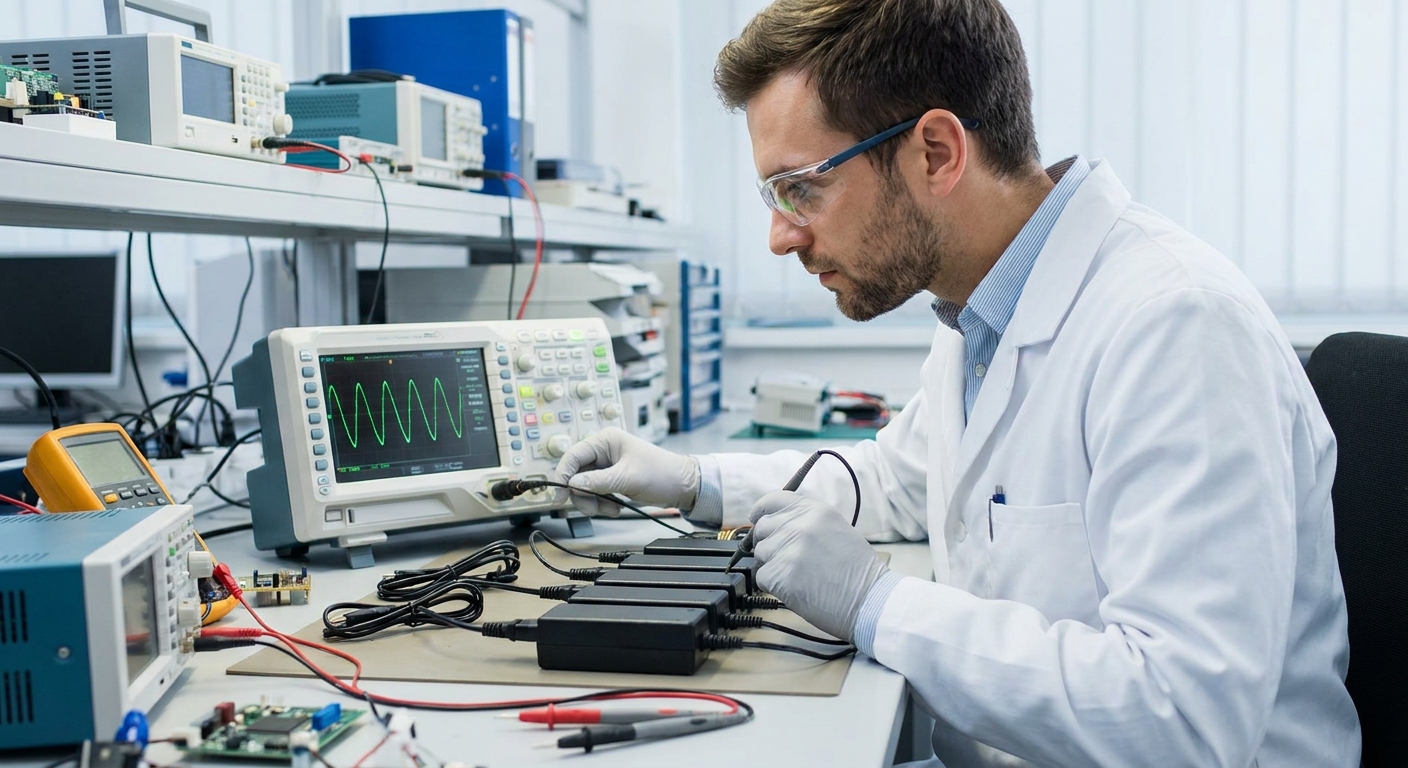
Before choosing a smart home power adapter OEM, buyers should thoroughly verify their manufacturing certifications, inspect their raw component sourcing standards, and evaluate their custom engineering capabilities. Partnering with a low-tier manufacturer can result in constant delivery delays and high field defect rates. But that is not all. If your partner lacks active safety certificates, you may have to pay for the entire testing process out of your own pocket.
To protect your investment, you must conduct virtual or on-site factory audits. A reputable factory will welcome your inspection and provide clear documentation of their manufacturing processes. They should also provide a dedicated contact engineer to guide you through design iterations. Having this direct line of communication is vital for resolving technical challenges quickly.
Conducting On-Site and Virtual Factory Audits
Vetting a factory based solely on online profiles is a risky approach for critical B2B sourcing projects. Think about it: a polished website can easily hide outdated equipment and poor quality control standards.
-
ISO 9001:2015: Registration proves the factory follows strict quality management systems.
-
Dedicated QC Spaces: Visual inspections of incoming component testing zones.
-
In-House Laboratories: Essential for conducting safety audits and EMI sweep tests.
Verifying these physical assets ensures you are dealing with a legitimate manufacturer. A reliable factory will openly share live video feeds of their production lines if you cannot visit in person.
Reviewing Quality Control Protocols
The safety and reliability of your smart devices depend heavily on the components used inside the power adapter. Here is the key: you must confirm that the factory does not use recycled copper or low-grade capacitors to cut costs.
-
Material Datasheets: Request MDS for all critical internal components.
-
100% Testing: Confirm they conduct dielectric and load tests on all finished adapters.
-
Failure Analysis Reporting: Review how they track and resolve production line defects.
Ensuring strict component vetting protects your product’s performance from degrading.
Key Takeaway: Conducting thorough factory audits and reviewing their component quality standards ensures you partner with a manufacturer capable of delivering safe, reliable, and highly stable power adapters.
| Sourcing Benchmark | Minimum Requirement | Ideal Factory Capability | Verification Method |
|---|---|---|---|
| Production Capacity | 100,000 units / month | Over 500,000 units / month | ISO factory audit records |
| Engineering Support | 5-person R&D team | 20+ expert power supply engineers | CAD/3D schematic verification |
| Lead Time Guarantees | 4 to 5 Weeks | 3 Weeks with material pre-stocking | Contractual penalty agreements |
Vetting potential manufacturers against rigorous sourcing benchmarks guarantees that your chosen partner has the engineering depth to support your scaling requirements.
⑩ How Can a Smart Home Power Adapter OEM Help Your Brand Grow?
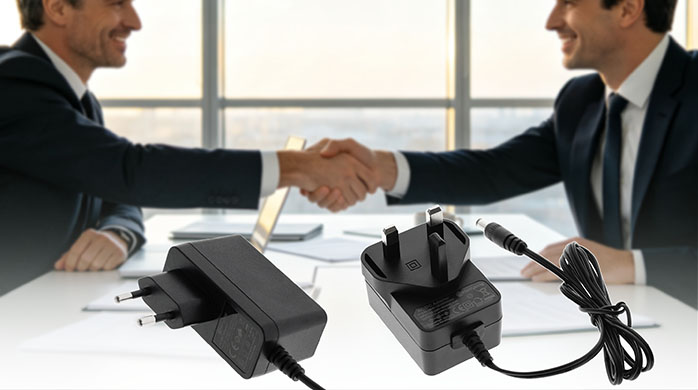
A reliable smart home power adapter OEM can help your brand grow by acting as a strategic co-design partner that reduces your overhead, accelerates your time-to-market, and protects your hardware reputation with stable, high-performance power solutions. By outsourcing the complex tasks of electrical engineering and global certifications, you free up valuable internal resources. Think about it: your engineering team can now dedicate 100% of their energy to perfecting your core smart application. This shift allows you to iterate faster and dominate your niche.
Furthermore, a solid OEM partner provides flexible manufacturing options that allow you to scale up production seamlessly as market demand spikes. They also offer continuous engineering support to help you upgrade your power supplies as new technologies emerge. In the B2B world, having a reliable manufacturing partner is the ultimate competitive advantage. It turns your power supply from a simple accessory into a strategic asset.
Building a Resilient Global Supply Chain
Scaling your business requires a supply chain that can withstand global disruptions and deliver consistent quality across multiple years. What does this mean for you? It means you need a partner who can guarantee consistent pricing and lead times regardless of market volatility.
-
12-Month Fixed Pricing: Protects your retail margins from sudden material cost inflation.
-
Safety Stock Buffers: Prevents production stalls during peak holiday demand seasons.
-
Optimized Logistics: Minimizes packaging size and weight to lower global shipping costs.
Establishing this level of supply chain resilience is critical for long-term retail success. A reliable manufacturer will work closely with your logistics team to optimize shipping volumes.
Fostering Trust and Brand Loyalty
In the smart device market, consumer trust is incredibly hard to win but extremely easy to lose with a single bad experience. Here is the key: an adapter that remains cool and operates flawlessly builds deep, lasting trust with your users.
-
Minimize Returns: Low return rates keep retail distributors happy and willing to stock your products.
-
Prevent Failures: Highly reliable power supplies protect your device from early hardware failures.
-
Excellent Reviews: Positive consumer reviews highlight the overall premium feel of your package.
This compound effect is what transforms a startup into a dominant household brand.
Key Takeaway: A reliable OEM partner does not just manufacture hardware; they provide the technical foundation, supply stability, and quality assurance that enable your brand to scale safely into global markets.
| Partner Metric | Low-Value Factory | High-Value OEM Partner | Your Decision Multiplier |
|---|---|---|---|
| R&D Capability | Copies generic standard reference designs | Custom designs tailored to housing constraints | Crucial for custom smart home builds |
| Certifications | Lacks valid safety credentials | Maintains active certificates under your brand | Protects your company’s liability |
| Warranty Terms | 12-Month limited parts warranty | 24 to 36-Month complete replacement policy | High warranty builds customer trust |
Comparing low-value suppliers with high-value OEM partners shows that investing in engineering transparency directly translates to long-term market leadership and customer trust.
Secure Premium Power for Your Smart Automation Devices
Launching a successful IoT product requires eliminating every point of hardware failure, and securing a certified, custom-tailored power supply is the single most effective way to protect your device’s performance. From resolving erratic grid currents and thermal management issues to accelerating global regulatory approvals, a dedicated manufacturing partner makes the path to market incredibly smooth.
At Merryking, we bridge the gap between complex electrical engineering and premium product design. We handle everything from bespoke PCB layouts and safety testing to automated high-volume mass production under one roof. Our mission is to empower smart hardware brands with the most reliable, efficient, and globally certified power supplies in the industry, enabling you to focus on what you do best: building the future of home automation.
Ready to elevate your hardware’s reliability and secure your supply chain? To receive custom engineering samples and a free manufacturing quote, contact us today.
FAQ
Can I customize the cable length and DC connector type for my smart devices?
Yes, you can fully customize all physical cables and connection tips. A dedicated OEM factory can custom-manufacture cables to your exact specifications, including customized lengths, premium shielding, and various DC jack or USB-C connector shapes. This ensures your power supply integrates perfectly with your product’s physical housing and aesthetic requirements.
What’s the best way to transition my custom design from prototype to high-volume manufacturing?
The best way is to execute a comprehensive Design for Manufacturability (DFM) review. This process optimizes your PCB layouts and component selections for automated high-speed SMT assembly, ensuring consistent quality and low defect rates during large production runs.
How do I know if my smart home power adapter requires a GaN chip inside?
You need a GaN chip if your device demands high power in a very compact footprint. Gallium Nitride (GaN) technology allows the factory to design ultra-small casings with exceptional thermal efficiency, which is perfect for premium smart home displays and charging hubs operating above 30W to 45W.
Can I apply my own brand logo and custom model number to pre-certified adapters?
Yes, you can easily apply your branding to existing certified models. Through a simple administrative transfer process, your OEM partner can apply for duplicate safety certificates under your brand name and model numbers, allowing you to bypass redundant, expensive laboratory testing fees completely.