Red Flags to Avoid When Choosing a Power Adapter Supplier
Ignoring Lacking Safety Certifications and Counterfeit Test Reports
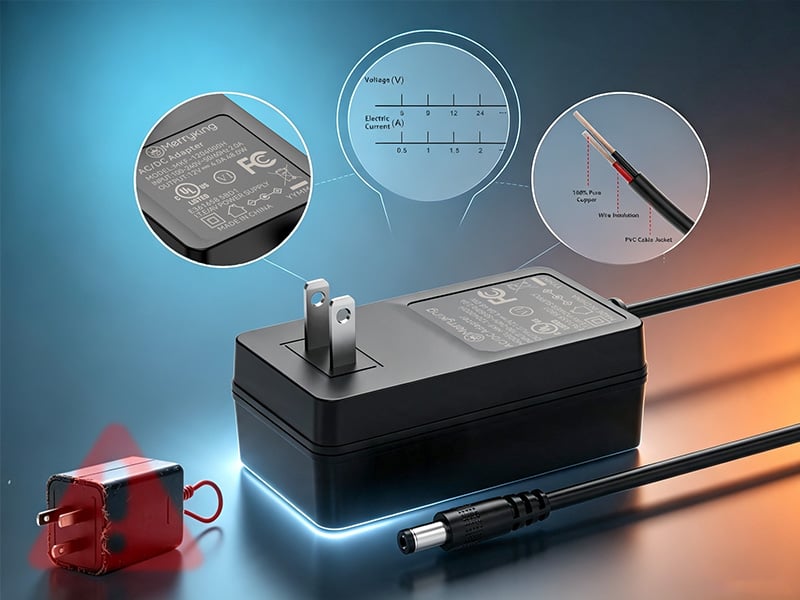
Navigating the global hardware procurement landscape presents numerous challenges, and partnering with an unreliable power adapter supplier can lead to severe operational risks, customs rejections, and dangerous product failures. The single most critical red flag during vendor evaluation is the inability to provide verifiable, authentic safety certificates. Unscrupulous manufacturers often use fraudulent test reports or expired certificates for Verify each compliance document according to its scope, including safety certificates, CE/UKCA declarations, EMC reports, and market-specific approvals. When reviewing a prospective partner, procurement teams must verify that documentation explicitly complies with international standards such as IEC 62368-1. Sourcing from a reputable, audited manufacturing factory like Shenzhen Merryking Electronics ensures full transparency, with genuine documentation covering universal AC input ranges (100V–240V AC) and robust internal circuit protections including over-voltage (OVP), over-current (OCP), over-temperature (OTP), and short-circuit protection (SCP). Accepting unverified documentation leaves your brand legally and financially exposed to massive product liability claims.
Overlooking Poor Thermal Design and Substandard Electronic Component Quality
Another major warning sign of a low-grade manufacturing partner is a lack of transparency regarding internal components and thermal management engineering. Low-cost vendors frequently cut corners by utilizing inferior aluminum electrolytic capacitors that experience rapid electrolyte evaporation under standard operating temperatures, leading to premature Equivalent Series Resistance (ESR) spikes, high-frequency buzzing, and total device failure. Furthermore, inadequate printed circuit board (PCB) layout design and poor spacing can cause excessive heat buildup, prematurely triggering thermal shutdowns or failing safety burn-in tests. Premier facilities mitigate these risks by deploying advanced Surface Mount Technology (SMT), high-temperature rated components, and rigorous 100% full-load burn-in testing in elevated temperature chambers. When evaluating a potential custom power supply manufacturer, always request detailed bill-of-materials transparency and data regarding operational efficiency, which should ideally range between 87% and 92% with ultra-low standby power consumption below 0.1W.
Failing to Inspect Physical Cable Integrity, Strain Relief, and Mechanical Durability
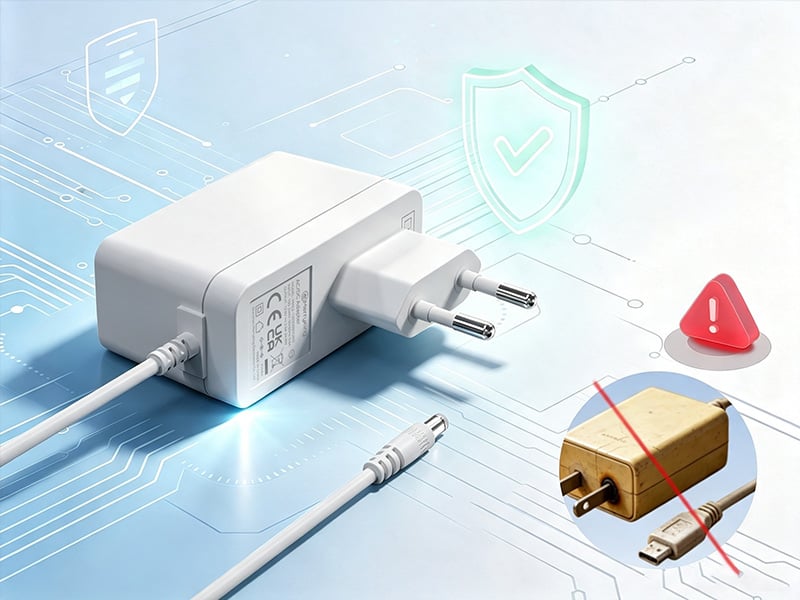
Physical mechanical failure remains one of the primary catalysts for end-user dissatisfaction and warranty returns, making mechanical design validation a vital criteria. Shoddy factories frequently utilize thin copper wire strands, substandard PVC insulation, or improperly reinforced strain relief joints near the output DC barrel plug (such as common 5.5x2.1mm or 5.5x2.5mm configurations) and the AC housing. Daily handling, tight wrapping, and repeated bending cause internal wire fracturing over time, resulting in intermittent power delivery or complete open circuits. A professional switching power supply factory incorporates robust strain relief boots, durable TPU or thick PVC outer jackets, and strict pull-force testing during production. If a supplier cannot provide evidence of mechanical bending and tensile strength testing, it indicates a high probability of high field-failure rates that can permanently tarnish your brand's reputation in the marketplace.
Disregarding Energy Efficiency Mandates and Regional Environmental Compliance
Environmental and green energy standards are strictly enforced across global markets, and partnering with a vendor that ignores these regulations will result in immediate customs clearance blocks. Governments worldwide mandate stringent energy efficiency protocols, such as the U.S. Department of Energy (DOE) Level VI standard and the European CoC Tier 2 guidelines, which dictate minimum operational efficiency thresholds and restrict no-load power consumption to under 0.1W. In addition, material compliance directives like RoHS and REACH restrict hazardous substances in electronics manufacturing. Unreliable suppliers often bypass these costly environmental testing phases to offer suspiciously low unit pricing. Choosing a compliant partner ensures your certified power adapters satisfy all regional legal frameworks, safeguarding your supply chain against expensive border detentions and environmental fines.
Neglecting Communication Channels, Customization Flexibility, and Post-Sales Support
A final red flag often overlooked during the initial quotation phase is poor communication infrastructure, rigid manufacturing capabilities, and inadequate post-sales technical support. Hardware brands frequently require customized output voltages, specialized DC plug polarity configurations, or unique casing dimensions to match specific electronic enclosures. Inflexible suppliers with outdated machinery cannot adapt to custom OEM/ODM requirements, leading to endless project delays and communication breakdowns. A dependable production partner maintains dedicated engineering teams, prompt communication channels, and comprehensive technical support to assist with troubleshooting, prototype iteration, and mass-production scaling. Prioritizing transparency, engineering competence, and collaborative support ensures a smooth, long-term manufacturing partnership that fosters steady business growth.
Frequently Asked Questions
What are the biggest financial risks of choosing a cheap, unverified power adapter supplier?
Partnering with unverified vendors often leads to customs confiscations due to fake certificates, catastrophic product fires caused by missing circuit protections, and costly product recalls that destroy brand trust and lead to heavy legal liabilities.
How can I verify if a supplier's safety certificates are genuine?
You should request official certificate numbers and test reports, then cross-reference them directly on authorized regulatory databases such as the UL Solutions Directory or European notified body online verification portals.
Why is 100% full-load burn-in testing important during manufacturing?
Burn-in testing exposes newly assembled power supplies to elevated temperatures and maximum electrical loads for hours before shipping, effectively weeding out infant mortality defects and ensuring long-term reliability in the field.