What Is a power adapter for energy storage systems
How do you choose a power adapter for energy storage systems? Imagine deploying a massive commercial energy storage system, only to face unexpected shutdowns and unstable control boards. These sudden failures often stem from poor power conversion, leading to severe overheating, voltage drops, and costly downtime that drains your profits. Sourcing a reliable, high-efficiency power adapter for energy storage systems protects your system from catastrophic failures and ensures constant uptime.
Key Takeaways for Procurement Managers
-
Efficiency Standard: Specify Level VI certified adapters to minimize heat generation within compact battery cabinets.
-
Mechanical Integrity: Use locking DC barrels or customized pin connectors to prevent accidental disconnects in vibrating environments.
-
Thermal Protection: Select adapters with built-in thermal shutdown and a broad operating range of -20°C to +60°C.
-
Safety Approvals: Ensure your supplier provides fully documented UL, CE, FCC, and RoHS certificates to avoid compliance delays.
1. Defining ESS Power Conversion Needs
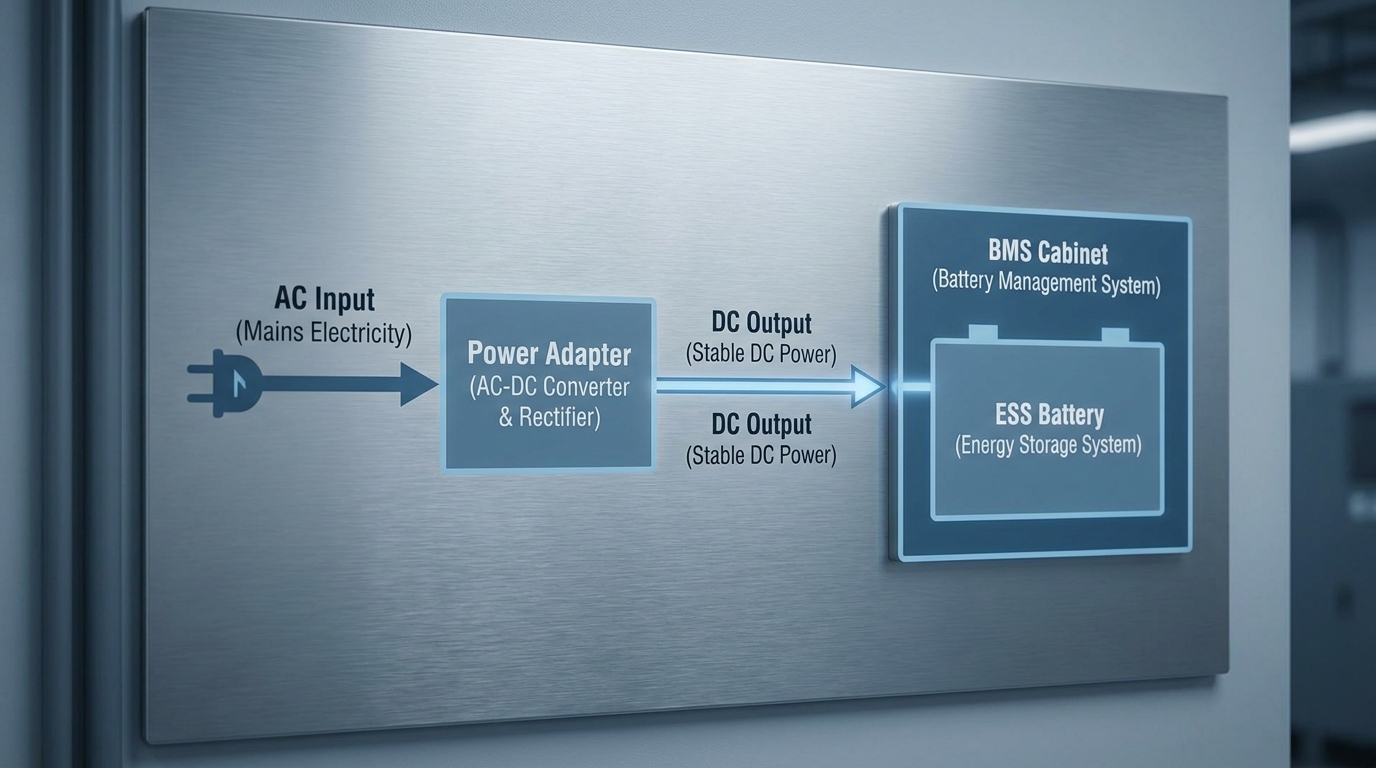
Defining your power conversion needs starts with understanding how auxiliary power keeps your battery management system stable. To achieve this, integrating a robust power adapter for energy storage systems is vital. This adapter supplies regulated DC current to critical monitors, cooling fans, and communication relays.
Without a reliable auxiliary power stage, sensitive control electronics risk experiencing high noise and random resets. Protecting these sub-systems ensures long-term operational reliability.
How Do Auxiliary Systems Draw Power?
Let’s face it: Your primary battery bank cannot directly power its own monitoring microprocessors without safe step-down conversion. Auxiliary systems require a steady, isolated power source to operate.
-
Microprocessors: Track state-of-charge (SoC) metrics.
-
Cooling Fans: Prevent localized heat spikes.
-
Telemetry: Send real-time performance updates.
Why Is Clean DC Voltage Critical?
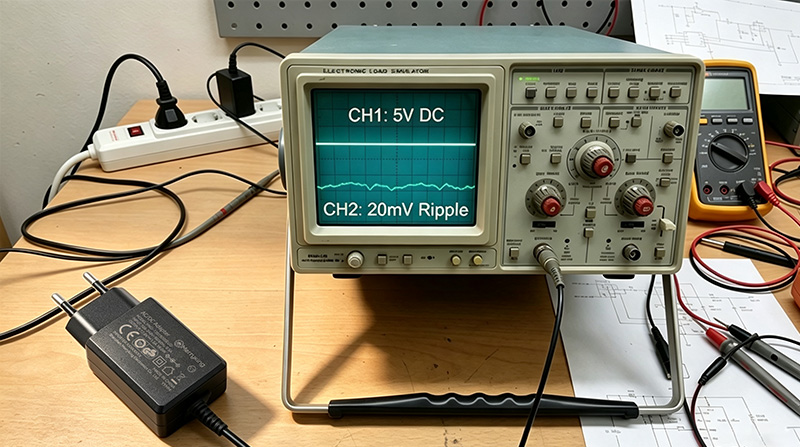
Think about it: High voltage ripple from low-grade power supplies introduces electric noise into delicate sensor circuits. This noise leads to inaccurate state-of-health telemetry.
-
Noise Reduction: Restores sensor precision.
-
Voltage Stability: Prevents controller reboots.
-
System Longevity: Protects expensive processor boards.
Key Takeaway: Clean DC voltage prevents sensor noise, preserving battery management accuracy.
| Metric | Standard Adapter | Industrial ESS Target |
|---|---|---|
| Voltage Ripple | < 150mVp-p | < 50mVp-p |
| Line Regulation | ± 5% | ± 1% |
This strict power quality requirement makes form factor selection the next logical step in your system design.
2. Selecting Desktop Power Adapter Form Factors
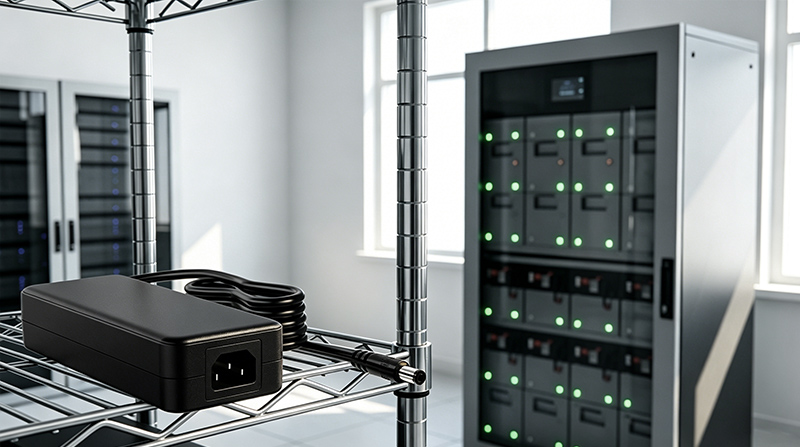
Selecting a desktop form factor is ideal when your ESS cabinet requires a high-wattage auxiliary power supply. Deploying a rugged desktop power adapter for energy storage systems prevents heat-generating components from warming your lithium battery cells.
These desktop units sit securely on internal shelves or brackets, providing reliable continuous currents. Their robust housings shield internal components from dust.
When Are Desktop Units Required?
Here is the catch: Small wall plugs cannot handle the high current demands of multi-rack ESS control systems. You must step up to desktop units for heavy auxiliary loads.
-
Multi-Rack Setups: Powering multiple BMS boards.
-
Active Cooling: Running high-wattage exhaust fans.
-
Solenoids: Energizing heavy-duty safety contactors.
How to Secure Desktop Adapters?
Let’s look at the numbers. Severe shipping and operational vibrations can dislodge loose internal components. Heavy desktop units must be anchored with robust brackets.
-
Metal Brackets: Prevent lateral sliding.
-
Hook-and-Loop Straps: Offer fast tool-less maintenance.
-
Rubber Pads: Absorb high-frequency mechanical shocks.
Key Takeaway: Desktop form factors offer the physical isolation and high-wattage output needed for multi-rack ESS cabinets.
| Wattage | Mounting Method | Cooling Style |
|---|---|---|
| 24W – 60W | Adhesive/Straps | Passive Convection |
| 90W – 150W | Bracket Clamp | Aluminum Heatsinks |
Once you select the physical form factor, you must calculate the precise electrical loads.
3. Calculating Electrical Load and Efficiency
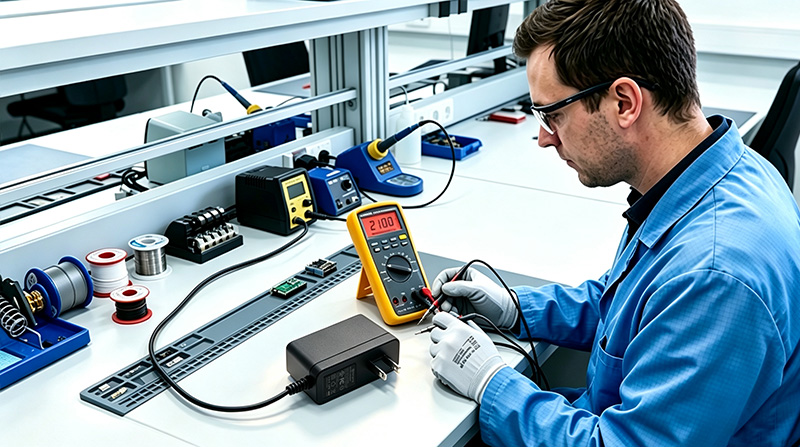
Calculating electrical load requires summing the continuous current demands of all auxiliary components and adding a safety margin. Specifying a high-efficiency power adapter for energy storage systems ensures minimal energy waste.
This step is crucial because an overloaded power converter will overheat and fail. Proper sizing prevents costly system downtime.
How to Calculate Total Current?
Why does this matter? Undersizing your auxiliary supply leads to voltage drops during peak fan startup cycles. You must calculate both continuous and surge currents.
-
Sum Continuous Loads: Add BMS and telemetry draw.
-
Factor Surge Loads: Include fan startup currents.
-
Apply Safety Margin: Multiply total sum by 1.20.
Why Is Level VI Rating Vital?
The short answer is simple: Level VI certified adapters waste far less power as heat, keeping your control cabinet cooler. They also meet strict global energy efficiency regulations.
-
Reduced Heat: Extends capacitor lifespans.
-
Low Standby Draw: Conserves standby battery power.
-
Global Compliance: Simplifies international system sales.
Key Takeaway: Level VI certified adapters reduce thermal build-up and guarantee compliance with global efficiency standards.
| Efficiency Class | Avg Active Efficiency | Standby Power Limit |
|---|---|---|
| Level V | ~85% | 0.3W – 0.5W |
| Level VI | >88% | < 0.21W |
This focus on efficiency naturally leads us to evaluate spaces where compact wall mount models shine.
4. Deploying Rugged Wall Mount Adapters
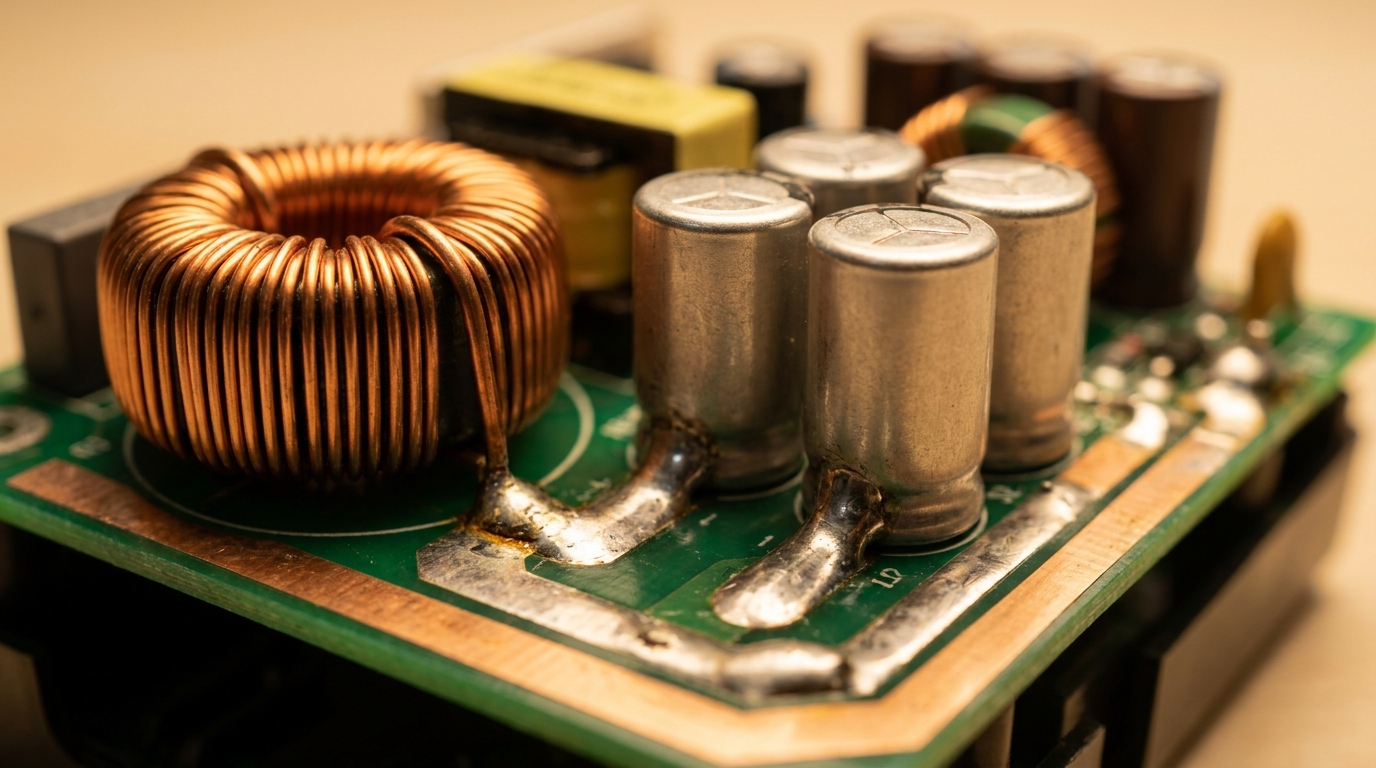
Deploying rugged wall mount units is best for space-constrained residential energy storage enclosures. A compact wall mount power adapter for energy storage systems plugs directly into your cabinet’s internal AC receptacle strip.
These units are lightweight and easy to integrate during factory assembly. They keep your internal cabinet layout clean and organized.
When Are Wall Units Preferred?
Think about it: If your system only draws 15 to 30 watts, a desktop adapter adds unnecessary clutter. Wall mount units save precious space.
-
Decentralized Systems: Ideal for compact residential units.
-
Zero Shelf Space: Mounts directly on the outlet.
-
Easy Routing: Minimizes internal AC cabling.
How to Secure Wall Units?
But there is a catch: Heavy wall adapters can sag in high-vibration industrial environments. You must ensure they remain locked in place.
-
High-Tension Sockets: Maintain strong blade grip.
-
Zip-Tie Securing: Prevents accidental fallout.
-
Clear Space: Keeps airflow open around the housing.
Key Takeaway: Wall mount adapters provide a space-saving, cord-free solution for compact, low-wattage energy systems.
| Parameter | Standard Wall Mount | High-Power Wall Mount |
|---|---|---|
| Output Range | 5W – 36W | 45W – 72W |
| Dimensions | 72 x 43 x 32 mm | 95 x 50 x 35 mm |
Keeping components securely mounted is only half the battle; you must also manage the heat inside.
5. Mitigating High Heat in Closed Enclosures
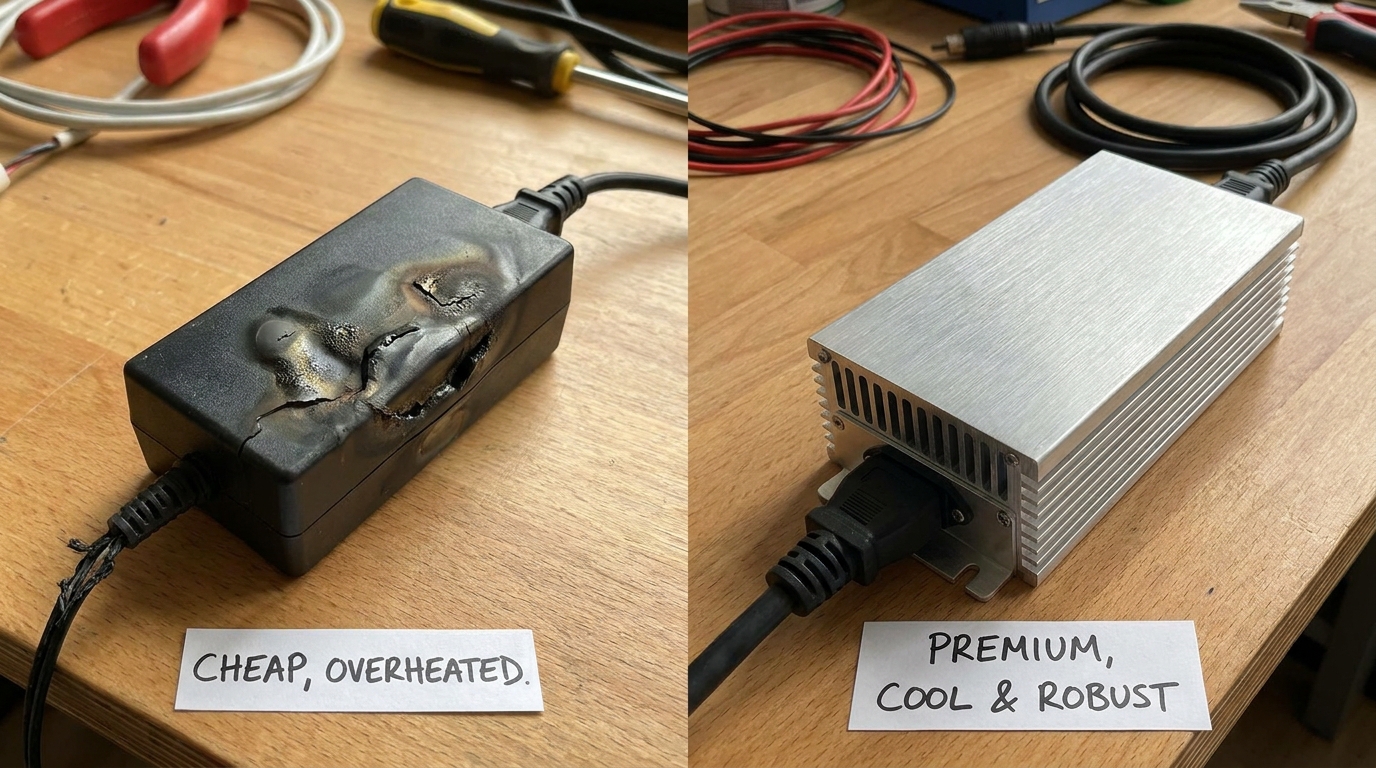
Mitigating high heat in closed enclosures requires selecting power supplies with excellent thermal designs. Sourcing a heat-resistant power adapter for energy storage systems is non-negotiable for sealed battery cabinets.
Passive convection cooling is preferred over mechanical fans to maximize system reliability. Efficient heat sinks ensure the adapter operates safely at elevated ambient temperatures.
Can Fans Be Eliminated?
Let’s look at the numbers. Mechanical cooling fans are often the first component to fail in dusty environments. Passive convection design eliminates this risk.
-
Dust Resistance: Keeps internal components clean.
-
No Moving Parts: Delivers higher MTBF ratings.
-
Silent Operation: Ideal for indoor commercial spaces.
How Does Overheat Safety Work?
Here is the catch: Extreme conditions can push temperatures beyond safe limits. High-quality adapters use built-in overtemperature protection to prevent fires.
-
Automatic Shutdown: Stops power flow during heat spikes.
-
Auto-Recovery: Resumes operation once cooled down.
-
Flame-Retardant Casing: Uses UL94 V-0 polymers.
Key Takeaway: Passive convection cooling and integrated thermal protection safeguard the system against extreme temperatures.
| Cooling Type | MTBF (Hours) | Dust Resistance |
|---|---|---|
| Passive Convection | > 100,000 | High (Sealed) |
| Fan-Assisted | ~ 40,000 | Low (Vented) |
This physical durability must be matched by deployment flexibility across different international regions.
6. Utilizing Interchangeable Plug Systems
Utilizing interchangeable plug systems is the most efficient way to prepare your energy storage products for global export. Standardizing on a single, flexible power adapter for energy storage systems allows you to ship to any international market.
This modular approach significantly reduces your regional inventory holding costs. It also simplifies logistical planning for global rollouts.
How Do Modular Plugs Work?
Think about it: Instead of stocking four unique adapter models, you stock one universal adapter body and various plug clips. This slides and locks into place in seconds.
-
US Blades: For North American markets.
-
EU Pins: For European utility projects.
-
UK Prongs: For commercial arrays in Britain.
Are Sliding Mechanisms Secure?
Why does this matter? A loose plug head can slip out of the outlet, causing sudden system power loss. High-quality designs use reinforced locking tracks.
-
Double-Button Locks: Prevent accidental release.
-
Solid Brass Pins: Ensure perfect electrical contact.
-
Heavy-Duty Tracks: Resist physical wear and tear.
Key Takeaway: Interchangeable plugs streamline global supply chains and reduce inventory overhead by up to forty percent.
| Region | Plug Type | Safety Approvals |
|---|---|---|
| US | Flat Parallel | UL / FCC |
| EU | Round Pin | CE / GS / RoHS |
| UK | Rectangular | UKCA |
Securing these physical connections must be backed by official regulatory certifications.
7. Demystifying Regulatory Safety Certificates
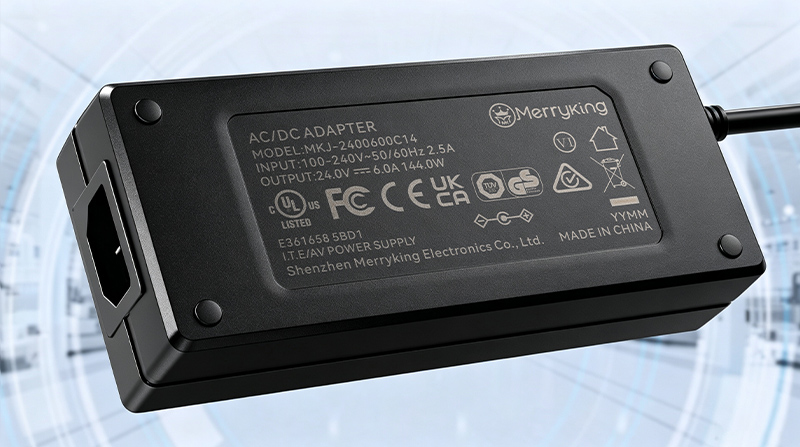
Demystifying safety certificates requires checking for independent laboratory stamps that prove the adapter meets local laws. Selecting a certified power adapter for energy storage systems protects your business from costly product liabilities.
Uncertified power adapters are a common cause of electrical fires and insurance claim denials. Verifying these documents protects your brand reputation.
Which Marks Are Essential?
The short answer is simple: Your target market determines the exact testing standards your power converter must pass. Never rely on self-declared compliance marks.
-
UL/cUL: Crucial for the North American market.
-
CE Mark: Mandatory for sales within Europe.
-
FCC Class B: Prevents electronic signal interference.
How to Verify Certifications?
Here is the catch: Many low-cost suppliers print fake logos on their plastic casings. You must verify certificate numbers online.
-
Database Checks: Verify files directly with UL.
-
Request Full Reports: Review real lab testing data.
-
Factory Audit Check: Confirm regular factory inspections.
Key Takeaway: Verified UL, CE, and FCC certificates mitigate legal risks and ensure seamless global customs clearance.
| Certificate | Target Region | Core Testing Focus |
|---|---|---|
| UL 62368-1 | North America | Shock & Fire Prevention |
| EN 62368-1 | European Union | Thermal & Safety Standards |
With safety compliance verified, you can confidently scale up production with a trusted partner.
8. Sourcing OEM Power Adapters for Scale
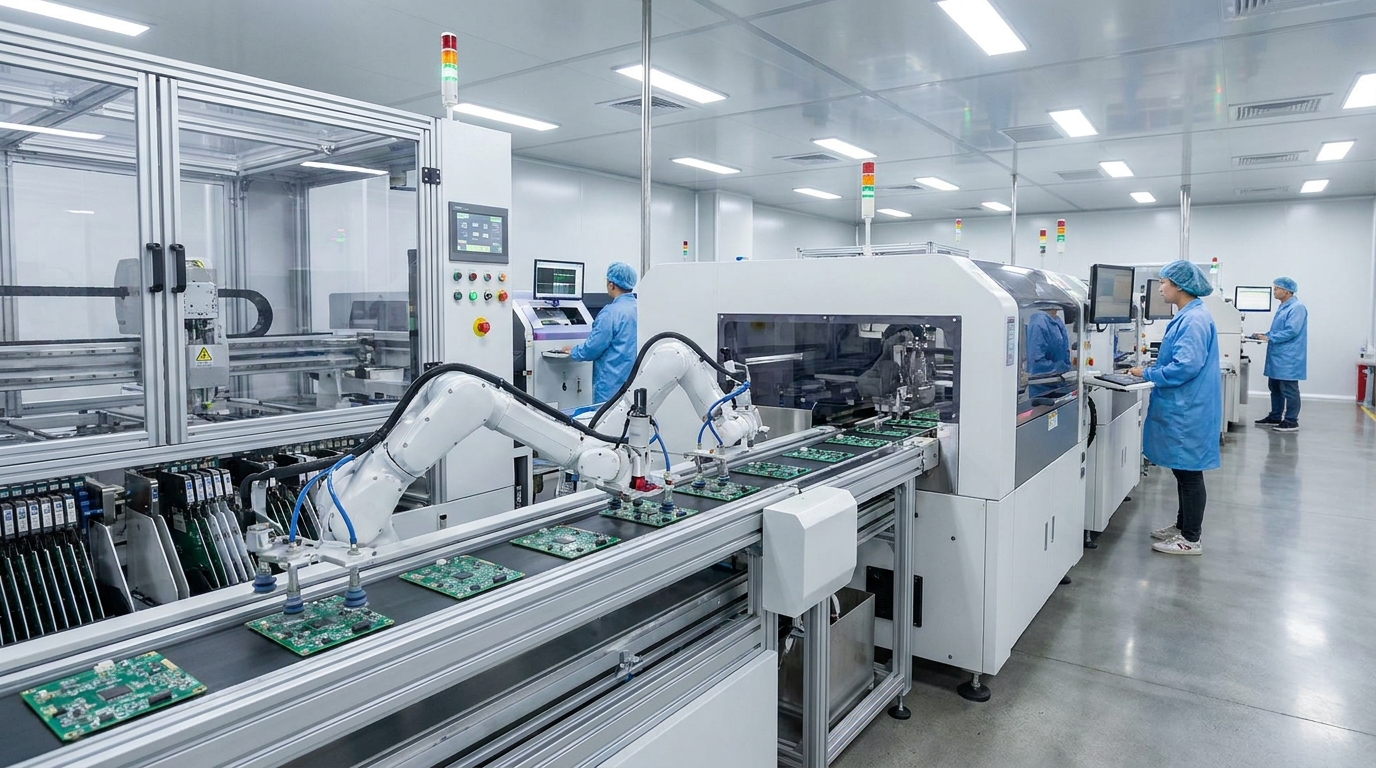
Sourcing OEM power adapters directly from a certified factory is the most cost-effective way to secure custom cable runs. Working with a dedicated factory to customize a power adapter for energy storage systems ensures you get the exact specifications needed.
This high level of engineering support is unavailable when buying generic off-the-shelf adapters. Custom strain reliefs and robust cables ensure durability.
How to Choose an OEM Partner?
Let’s look at the numbers. A single delayed shipment can halt your entire battery assembly line, costing thousands. Look for partners with ISO 9001 quality audits.
-
In-House Testing: Ensures 100% full-load burn-in tests.
-
Material Sourcing: Guarantees stable component supply.
-
Direct Engineering: Enables fast modifications to your specs.
Can Wires and Plugs Be Customized?
Why does this matter? Standard thin cables lead to excessive voltage drops over distance, destabilizing the BMS. Custom thick-gauge wires solve this problem.
-
16 AWG Wire: Minimizes line voltage drop.
-
Locking Barrel: Prevents loose wire connections.
-
Custom Printing: Adds your corporate branding.
Key Takeaway: Direct OEM sourcing offers tailored cable specs, lower unit costs, and long-term production reliability.
| Customization | Selection Range | Production Impact |
|---|---|---|
| Cable Gauge | 16 AWG – 22 AWG | Minimizes voltage drops |
| Connector Type | Locking Barrel / Mini-Fit | Prevents loose connections |
Understanding these customization options helps clarify the integration challenges answered in the next section.
9. Frequently Asked Questions: ESS Integration
Finding answers to common technical queries helps you avoid expensive design mistakes during the integration phase. Sourcing the right power adapter for energy storage systems involves analyzing electrical tolerances, thermal safety levels, and global regulatory compliance metrics.
These answers provide quick, actionable insights to guide your hardware decisions. They ensure your chosen power supply meets all industrial safety demands.
Can I use a consumer-grade power adapter for an industrial ESS?
No. Consumer-grade power adapters lack the advanced thermal protection, robust electronic filtration, and continuous 24/7 duty cycles required for commercial energy storage environments.
What’s the best efficiency rating for 24/7 ESS operations?
Absolutely Level VI. This premium efficiency rating guarantees minimal waste heat generation, significantly reducing thermal strain inside tightly sealed cabinets.
How do I know if my adapter meets global safety codes?
Yes, by checking the safety markings. Look for verified UL, CE, FCC, and RoHS logos printed directly on the adapter housing, and confirm their certificate numbers online.
Can I customize the connector pinout on my OEM adapter?
Absolutely. Sourcing directly from an OEM manufacturer like Merryking lets you customize output cable lengths, wire gauges, and connector types to fit your BMS board perfectly.
How do I know if my system requires a desktop or wall-mount adapter?
Yes, it depends on wattage. Desktop form factors are ideal for loads over 75W, while wall-mount units are perfect for low-power, space-constrained residential systems.
10. Partnering for Reliable ESS Power Supply
Partnering with Merryking Power ensures you receive high-performance, certified power supplies tailored specifically to your battery systems. Specifying a rugged, Level VI certified power adapter for energy storage systems prevents unexpected downtime and extends battery lifespans.
From prototype building to high-volume manufacturing, we provide verified electrical solutions that comply with global safety standards. Let’s look at how we can help your project succeed.
How to Initiate Your OEM Project?
Think about it: Why waste weeks troubleshooting power issues when you can access direct factory engineering from day one? We simplify the entire B2B sourcing process.
-
Define Specs: Share voltage, connector, and housing needs.
-
Get Samples: Test custom physical prototypes in your laboratory.
-
Safety Audit: Verify compliance before manufacturing starts.
What to Look for in Factory Audits?
Let’s look at the numbers. Factories that test 100% of their adapters under full load have near-zero return rates. We maintain strict ISO 9001 quality controls.
-
SMT Lines: Automated robotic component placement.
-
Burn-In Testing: Hours of active load testing.
-
Optical Checks: Precision quality verification.
Key Takeaway: Merryking offers end-to-end design, rigorous testing, and complete compliance to secure your global supply chain.
| Procurement Phase | Target Timeline | Key Milestone |
|---|---|---|
| Technical Review | Weeks 1 – 2 | Electrical spec approved |
| Prototype Testing | Weeks 3 – 5 | Lab validation completed |
| Mass Production | Weeks 6 – 8 | Bulk shipment delivered |
This clear roadmap protects your production pipeline and ensures your product launch goes smoothly.
Conclusion & CTA
Selecting a high-quality, certified power adapter is the key to preventing sudden system resets, electrical hazards, and expensive maintenance cycles in energy storage installations. By integrating specialized Level VI adapters with robust environmental protections, you ensure continuous safe power delivery to your critical battery management electronics. Merryking Power delivers the exact engineering expertise, industrial-grade durability, and international safety credentials your projects demand.
To discuss your custom electrical specifications, request sample units, or review our compliance files, contact us today to speak with a direct power design engineer.