Essential Testing Requirements for Every Custom Power Adapter
Rigorous Burn-In Protocols and Full-Load Thermal Aging
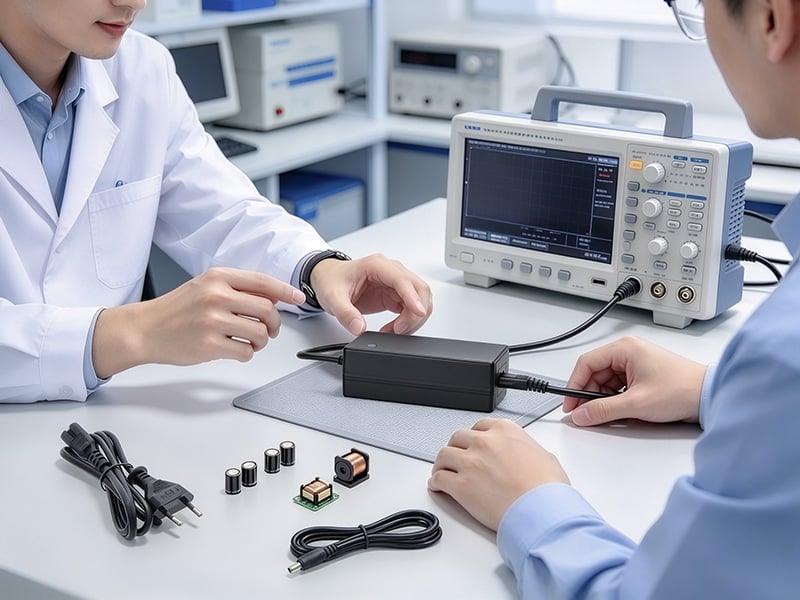
When engineering teams commission a bespoke power solution for specialized industrial or medical machinery, ensuring operational stability is the ultimate objective. Deploying a tailored custom power adapter requires an uncompromising, multi-tiered testing regimen before any batch leaves the factory floor. Unlike mass-produced generic alternatives that undergo only basic random checks, a professional custom unit must pass intensive burn-in protocols. During a mandatory 100% full-load aging test, power supplies operate at maximum rated capacity under elevated ambient temperatures for an extended duration. This rigorous stress-testing methodology helps identify potential infant-mortality component defects, allowing quality control engineers to screen out vulnerable high-frequency transformers, unstable electrolytic capacitors, or fragile switching transistors before final assembly and packaging.
Systematic Acceptance Quality Limit (AQL) Mechanical and Visual Inspections
Beyond thermal stress validation, production batches must undergo systematic Acceptance Quality Limit (AQL) sampling inspections prior to dispatch. Independent quality inspectors evaluate statistical samples against strict mechanical, dimensional, and visual criteria. This critical phase ensures that every unit matches the approved physical form factor, cord length, DC connector configuration, and enclosure tolerances required by the host application. By combining 100% full-load aging with meticulous AQL sampling, manufacturers establish an uncompromised audit trail that guarantees consistent batch quality, minimizes defective return rates, and provides complete operational transparency for corporate compliance departments.
Advanced Electrical Parameter Verification and Ripple Suppression
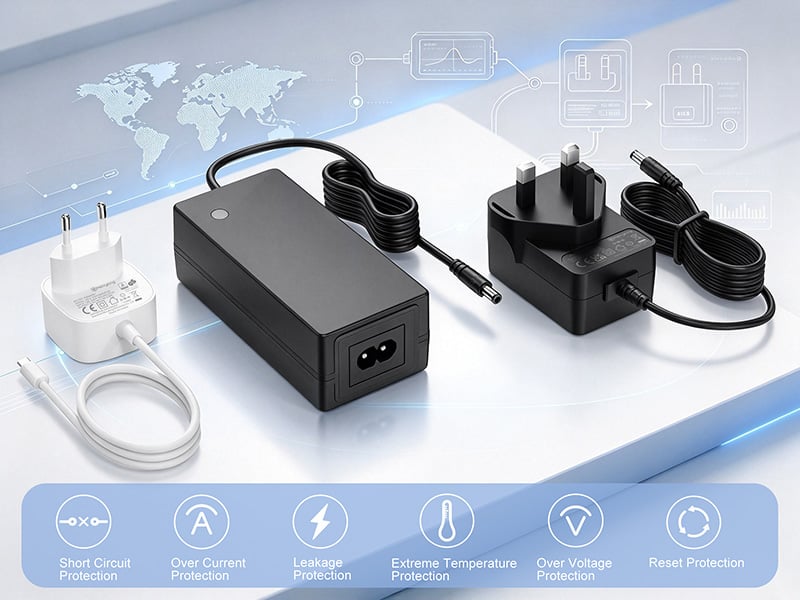
The core of any reliable power supply lies in its electrical performance under fluctuating operational loads. Professional testing protocols require precise measurement of output voltage regulation, dynamic transient response speeds, and critical protection thresholds, including short-circuit, over-voltage, and over-temperature safeguards. Special engineering emphasis is placed on minimizing ripple current and electrical noise, ensuring that clean, regulated power flows directly into delicate microelectronic circuitry. This meticulous tuning prevents data corruption in digital communication devices and eliminates electromagnetic hum in sensitive audio or diagnostic medical instrumentation.
Electromagnetic Interference (EMI) Pre-Compliance and Global Safety Standards
The final hurdle in professional power supply qualification involves electromagnetic interference (EMI) pre-compliance scanning and international safety certification verification. Engineers utilize specialized laboratory equipment to measure conducted and radiated emissions, ensuring that the power supply does not interfere with surrounding electronic systems or succumb to external electrical noise. Furthermore, verifying strict adherence to global eco-design and safety frameworks—such as DOE Level VI or CoC Tier 2 efficiency standards—guarantees effortless customs clearance and smooth regulatory approval for worldwide commercial deployment.